
Chapter 07
Melbourne Taught Me That Your Career Is Portable. Most People Never Learn That.
That trip completely changed the way I viewed both travel and people.
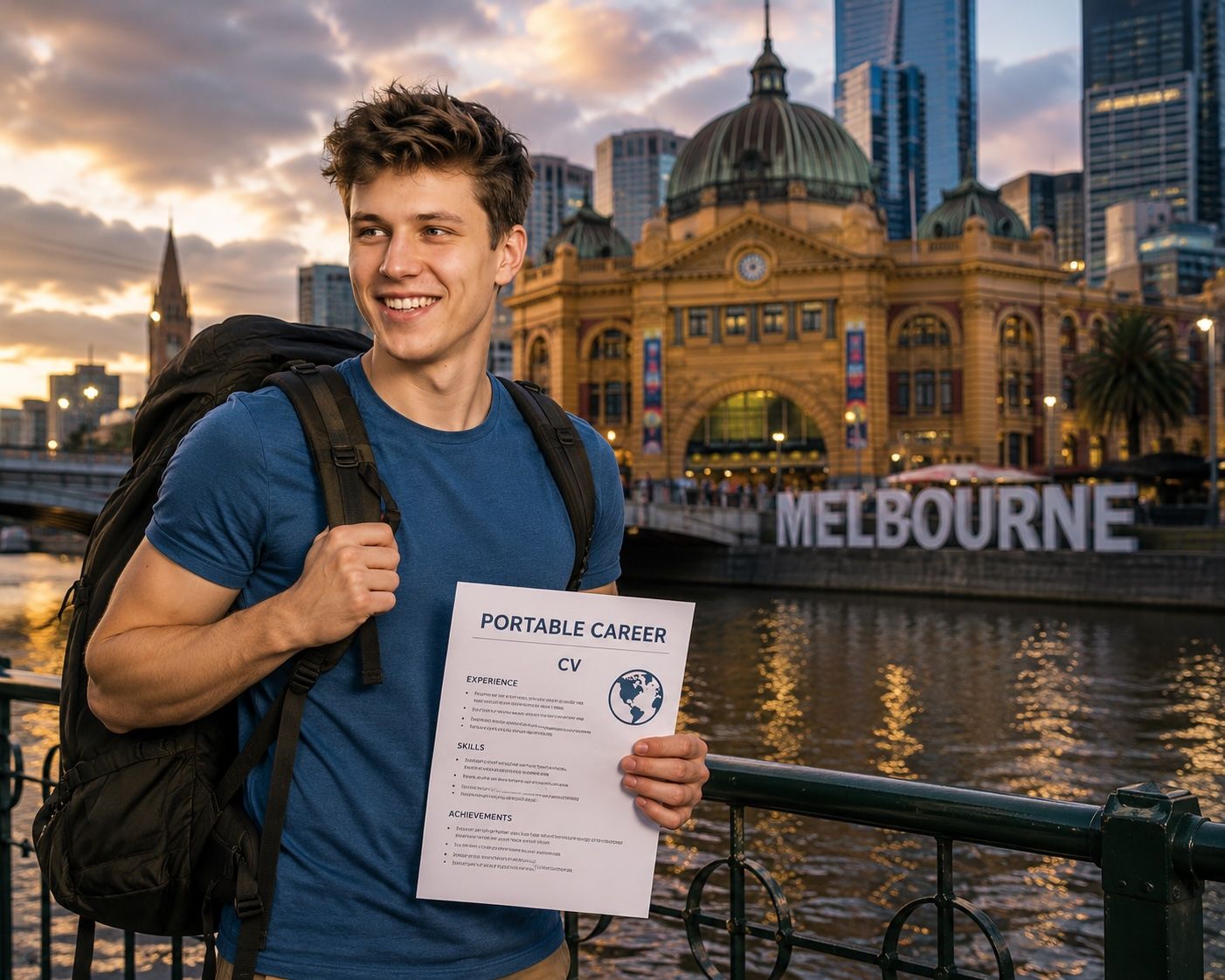
Melbourne Taught Me That Your Career Is Portable. Most People Never Learn That.
One of the biggest fears people have throughout their working lives is losing their job. It doesn't matter whether they are twenty-five or fifty-five, employed or self-employed; there is always that nagging doubt in the back of their mind that everything they have built could disappear overnight. Looking back, I can honestly say that fear disappeared for me in Melbourne, although at the time I had absolutely no idea that was the lesson I was about to learn.
By the time Sue my fiancée and I landed in Australia we had already travelled the length of America on Greyhound buses, spent a couple of unforgettable weeks in Fiji where I discovered that accepting a rugby invitation from the locals was an excellent way of being introduced to Fijian hospitality and an equally excellent way of waking up battered the following morning, and arrived in Melbourne carrying little more than backpacks, a telephone number for a friend who lived locally and rapidly diminishing savings earned from working in Florida.
We didn't have jobs, we didn't have anywhere permanent to live and, unlike today, there was no internet, no Airbnb and certainly no mobile phones to make life easier. We simply had a hostel guidebook and the confidence that somehow things would work out.
That trip completely changed the way I viewed both travel and people.
Until then, my overseas travel experience had largely consisted of organised holidays or visiting resorts to audit accounts, but travelling independently forces you to rely on complete strangers every single day and, in doing so, you quickly discover that young travellers from completely different countries, religions, backgrounds and cultures have far more in common than politicians would often have you believe.
They all simply want to experience the world. It is one of the reasons I have always believed that travel is a force for good: it quietly challenges prejudices on every side. If you never visit countries you disagree with, how can you ever hope to understand why they think differently, let alone persuade them that they are wrong?
Reality struck almost immediately in Melbourne. My carefully constructed plan had been to walk into a supermarket, armed with my previous experience at Tesco and Sainsbury's, and quickly earn enough money to fund the next stage of our adventure.
Instead, I discovered that local youngsters without professional qualifications were desperately competing for exactly the same jobs and I wasn't remotely special. Within days it became obvious that if I wanted to survive, I needed to stop thinking like a backpacker and start thinking like a professional accountant working in the travel industry.
There was just one small complication. My travel visa didn't allow me to take up permanent employment, so I found myself inventing a rather imaginative story that I was engaged to our childhood friend, who owned a house in Melbourne, rather than to Sue, simply to give my application a little more credibility. It wasn't my proudest moment, and it certainly made answering telephone calls interesting because, of course, I didn't actually live there. Fortunately, my employer only ever tried to contact me at home once and we manged to blag our way through it.
After spending the best part of a week walking around Melbourne dropping off my CV, I was offered a job with the travel division of a local bank that had originally been created to organise travel for its own employees before expanding into corporate travel management. It sounded straightforward enough until I discovered they had selected an obscure accounting package that allowed staff to enter transactions with remarkable ease but had somehow failed to produce a single meaningful management report or customer invoice for eighteen months.
For most people it was an impossible problem, but for me it was an opportunity to impress in a new role that I really did not know anything about. I quickly taught myself enough programming to get underneath the system, extract the information the business desperately needed and slowly rebuild its reporting capability. Three months later I had solved the problem, transformed one of the bank's biggest operational headaches and found myself flying around Australia helping other divisions resolve financial systems issues. The difficult job that nobody wanted had become the easiest job I had ever had because the system one operational dis all the hard work.
The commercial lesson has stayed with me ever since. Qualifications open doors, but it is your willingness to solve difficult problems, learn skills you don't yet possess and navigate organisations intelligently that makes you valuable. Those qualities travel remarkably well. They are just as useful in Melbourne as they are in Manchester, in banking as they are in travel, and forty years later they remain just as relevant in the age of artificial intelligence.
Ironically, just as life in Australia was becoming comfortable, Sue's father became seriously ill, and we had to abandon everything and fly back to Britain overnight. Once again life reminded us that carefully made plans can disappear in an instant.
The difference was that this time I wasn't worried.
Melbourne had already taught me the most valuable lesson of my early career. Jobs come and go. Industries change. Countries change. Technology changes. But if you become the sort of person who can walk into an unfamiliar business, solve problems that others cannot and create value wherever you go, you never really need to fear starting again.
As your find out in the next chapter, I was soon to find this out yet again.
